Introduction
Noise is one of the most persistent and underestimated health hazards in the construction industry. The constant roar of heavy machinery, repetitive hammering, and high-decibel tools can create long-term health impacts, often going unnoticed until it’s too late. Noise-induced hearing loss (NIHL) and tinnitus are silent threats, with irreversible consequences for workers exposed to excessive noise levels daily.
In this post, we’ll explore:
- The mechanics of how noise affects hearing.
- The regulatory framework for managing noise at work.
- Strategies for controlling noise risks on construction sites.
- The importance of education and training for workers and employers.
If you’re ready to take workplace safety seriously, our Occupational Health Awareness – Noise course provides essential training to help you protect your team and meet legal obligations.
The Science Behind Noise-Induced Hearing Loss
Hearing is one of our most delicate senses, relying on intricate processes within the inner ear. Here’s how noise damages hearing:
- Sound Transmission: Noise enters the ear and vibrates the eardrum, transferring sound waves to the cochlea through small bones.
- Cochlear Hairs: The cochlea contains tiny hair cells that sway in response to sound vibrations, converting these vibrations into electrical signals sent to the brain.
- Damage from Noise: Loud, prolonged, or repetitive noise causes these hairs to bend or flatten. Unlike other body parts, these hairs don’t regenerate. Over time, this damage leads to hearing loss or tinnitus (a constant ringing sound in the ears).
Why Does It Matter?
Unlike a cut or bruise, hearing damage is cumulative and irreversible. The early signs, such as mild tinnitus, are often ignored. Over time, this progresses into permanent hearing loss, impacting not just work but every aspect of life.
The Scope of the Problem
Statistics That Demand Attention
- The HSE estimates 11,000 new cases of noise-induced hearing loss annually in the UK alone (2019–2022).
- Construction workers are twice as likely to suffer from NIHL compared to other industries.
- The cost of untreated hearing loss isn’t just physical—it impacts mental health, productivity, and workplace morale.
Common Noise Hazards in Construction
- Heavy Equipment: Jackhammers, excavators, and power tools often exceed 100 decibels (dB).
- Piling and Drilling: These tasks can produce noise levels of up to 120 dB.
- Confined Spaces: Noise in enclosed areas can amplify sound pressure, increasing the risk of damage.
Understanding the Noise at Work Regulations
The UK’s Noise at Work Regulations (2005) provides a legal framework to protect workers from excessive noise exposure. These regulations define three critical thresholds:
- Lower Action Level: 80dB(A) average noise level. Employers must provide information and hearing protection if requested.
- Upper Action Level: 85dB(A). Employers must actively reduce noise exposure and provide mandatory hearing protection.
- Exposure Limit Value: 87dB(A). No worker should be exposed to this level, even with hearing protection.
What Does This Mean for Employers?
Employers are legally required to:
- Conduct noise risk assessments.
- Implement noise control measures, prioritizing collective protection over individual PPE.
- Offer regular hearing checks to workers exposed to noise above the lower action level.
- Provide training and education on noise risks and mitigation.
Effective Strategies for Managing Noise Risks
1. The Hierarchy of Control
Managing noise requires a systematic approach, prioritizing prevention over reaction.
- Eliminate the Risk: Use quieter processes or eliminate unnecessary tasks. For example, replacing hammering with concrete bursting techniques.
- Substitute with Safer Alternatives: Opt for quieter, electric-powered machinery instead of diesel engines.
- Isolate the Noise Source: Use acoustic barriers or enclosures around noisy equipment.
- Engineering Controls: Install sound-dampening materials, such as foam panels or mufflers.
- Administrative Controls: Limit exposure time through task rotation or scheduling noisy tasks when fewer workers are present.
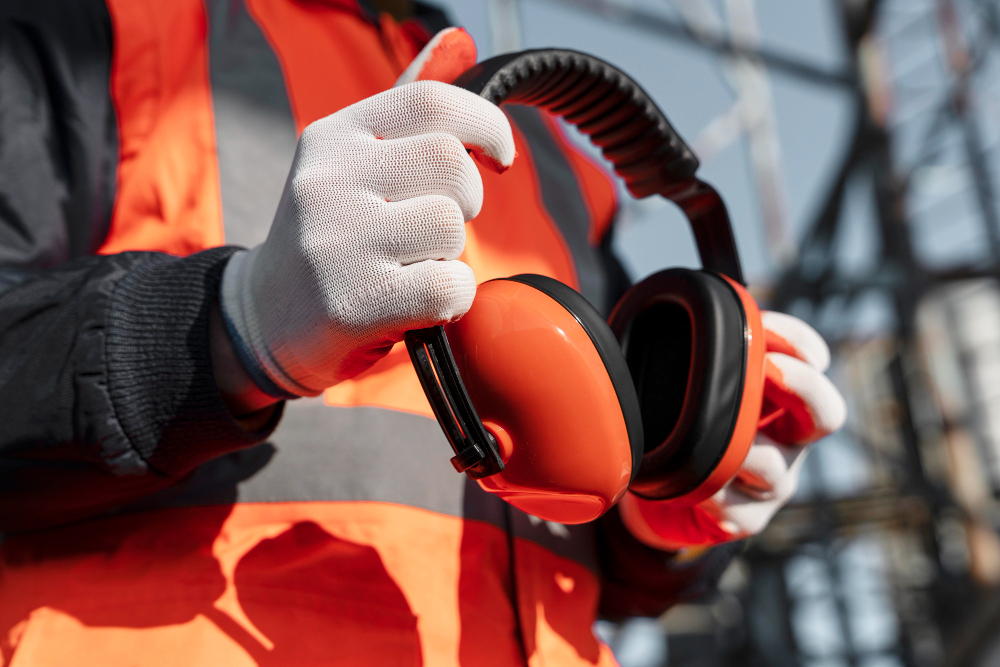
- Personal Protective Equipment (PPE): Provide earplugs or earmuffs as a last resort. Ensure proper training on their use.
2. Acoustic Solutions
- Curtains and Quilts: Acoustic curtains around workstations can significantly reduce noise levels for nearby workers.
- Enclosures: Encasing machinery like generators and breakers minimizes noise exposure to the wider site.
- Portable Barriers: These can be deployed around specific equipment or tasks for localized noise reduction.
3. Monitoring and Assessment
Noise exposure is often underestimated. Use professional-grade noise meters to monitor levels regularly. Avoid using mobile phone apps for precise measurement, as they are not calibrated for professional use.
Why Training is Essential
Even with regulations and strategies in place, the effectiveness of noise management depends on awareness and education. Workers often neglect hearing protection due to discomfort or a lack of understanding about long-term risks. Employers may struggle to implement controls without clear guidance.
Our Course: Occupational Health Awareness – Noise
This course is designed to bridge that gap, offering comprehensive training on:
- The science of noise and its effects on hearing.
- Legal responsibilities under the Noise at Work Regulations.
- Practical noise control measures, from engineering solutions to PPE.
- Interactive tools like drag-and-drop activities and real-world scenarios to engage learners.
What You’ll Gain:
- Improved understanding of occupational noise risks.
- Actionable strategies to protect workers and comply with regulations.
- Certification to demonstrate your commitment to workplace safety.
Conclusion
Occupational noise is a silent but deadly hazard in construction. By understanding its effects and implementing proactive measures, you can safeguard your workforce and comply with legal standards.
Don’t let noise steal the hearing—and well-being—of your team. Take action today.
Explore the Occupational Health Awareness – Noise Course and start building a safer, healthier future for your workforce.